What is a Container Reach Stacker? Complete Overview
Known by various names such as container handlers, laden container reach stackers, and telescopic container stackers, container reach stackers were first introduced to the market in the 1980s by Kalmar (Sweden). Since then, this equipment line has been widely adopted, rapidly developed, and has become an indispensable type of port cargo handling equipment at leading container terminals worldwide.
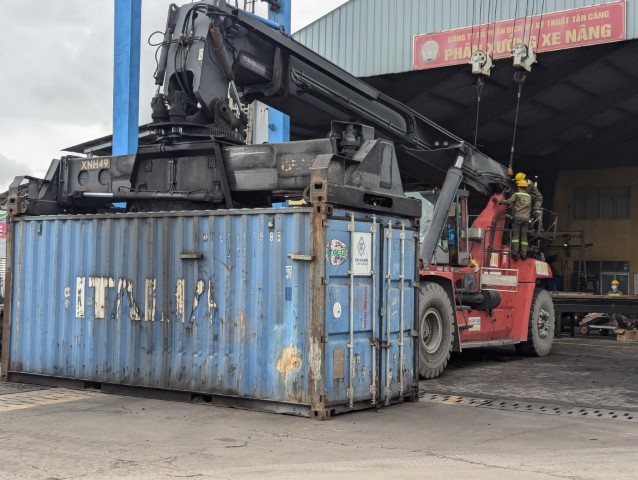
Container reach stackers are favored and extensively deployed across container logistics hubs thanks to their superior versatility and high operational productivity.
The structural design of reach stackers utilizes an extendable telescopic boom instead of a rigid vertical mast. This makes traveling significantly safer and easier, as containers can be lifted and carried overhead without obstructing the operator’s forward visibility—providing vastly superior control and operational efficiency compared to conventional vertical mast forklifts. Furthermore, with the boom’s ability to adjust its luffing angle and extension length, reach stackers can easily access containers stacked in the 2nd and 3rd rows instead of being limited solely to the outer 1st row like vertical handlers.
At container ports, ICDs, and logistics depots, reach stackers play a crucial role in handling, stacking, and organizing cargo. With lifting capacities exceeding 45 tonnes, lift heights above 16 meters, and the capability to stack containers 3 to 5 tiers high, reach stackers offer exceptional flexibility, high throughput, and require only a single operator.
Beyond container handling at container yards and quaysides, reach stackers equipped with specialized attachments can also be used for heavy general cargo, steel coils, and project cargo.
As global trade expands and cargo volumes become increasingly diverse, equipment manufacturers continuously innovate to produce more powerful, feature-rich, and versatile reach stackers to meet diverse operational requirements and budget constraints. Safety systems and ergonomic driver assistance have also become paramount priorities.
Key Factors to Consider When Selecting Container Reach Stackers
- Operational Purpose:
- Container handling at sea terminals, container yards, or inland container depots (ICDs)…
- Are empty containers handled in large quantities? (If empty container volume is high, investing in dedicated empty container handlers can significantly reduce operating costs).
- Is there a requirement for handling breakbulk or heavy project cargo?
- Operating Frequency and Fleet Utilization:
- What is the expected operating intensity (operating hours per day/month)?
- Does the maintenance and technical support schedule align with production demands?
- What is the required fleet size and yard layout distribution?
- Operating Environment & Yard Conditions:
- Is the yard surface flat concrete/asphalt or uneven terrain? (Uneven terrain exerts extreme mechanical fatigue on reach stacker booms and chassis).
- Are weather conditions harsh or highly corrosive? (In tropical monsoon climates like Vietnam, mechanical and electrical components are prone to severe corrosion).
- Is yard aisle space confined or spacious? (For large empty container storage where block stacking is deep without frequent selective shifting, vertical empty handlers may be suitable).
- Container Dimensions and Load Capacities:
- Standard container sizes handled (20ft, 40ft, 45ft ISO containers)?
- Average and maximum gross container weights handled?
- Stacking height requirements (3-tier, 4-tier, or 5-tier stacking)?
- Speed and Productivity Requirements:
- Required hoisting and luffing cycle speeds?
- 24/7 continuous duty cycle demands?
- Need for advanced features (load moment indicators, auto-lubrication, telematics)?
In cases where businesses choose to procure used container reach stackers or pre-owned mobile port equipment, Tan Cang Tech draws upon decades of direct operational and technical assurance experience across major port systems to recommend key inspection checkpoints:
Key Inspection Checkpoints When Buying Used Reach Stackers
- Chassis & Structural Frame: Thoroughly inspect all critical welds, gusset plates, and chassis crossmembers for structural cracks, fatigue deformation, or severe corrosion.
- Telescopic Boom & Cylinders: Inspect hydraulic cylinders, chrome plating, pins, bushings, and seal packings for leaks or scoring; verify smooth telescopic extension and luffing movement without shuddering, play, or micro-fractures.
- Spreader Assembly: Thoroughly inspect the telescopic spreader frame for micro-cracks, structural twist, twistlock wear limits, centering guides, and hydraulic rotation motors.
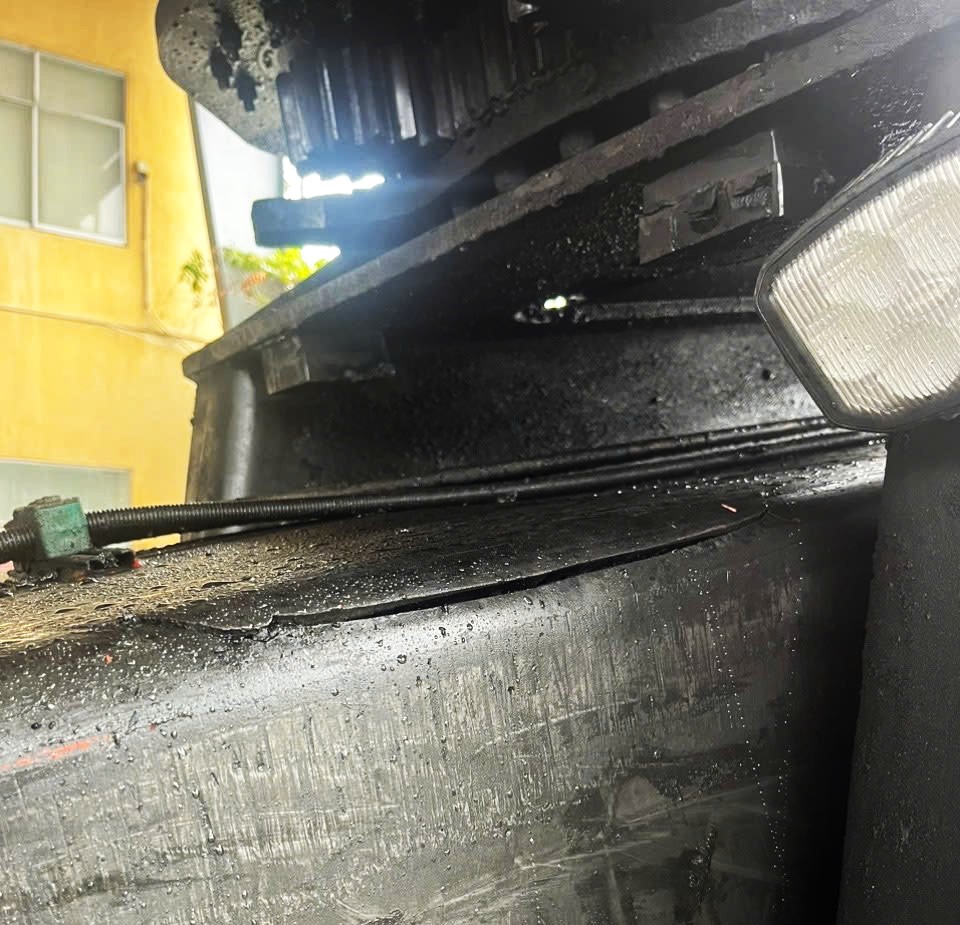
- Tires & Wheel Rims: Check tire tread wear, casing integrity, and inflation pressure. Severely worn industrial tires represent substantial immediate replacement costs.
- Diesel Engine & Powertrain: Verify engine start-up performance, smoke emissions, oil pressure, transmission shifting under load, and check whether unauthorized modifications or non-OEM components have been installed.
- Electrical, Safety, & Lighting Systems: Ensure all overload warning systems (LMI), camera monitors, reversing sensors, working lights, and warning alarms function reliably.
- Maintenance History & Logbooks: Inspect maintenance records to verify compliance with OEM service intervals and check for histories of catastrophic component failures.
- Yard Operating History Assessment: Working yard terrain dramatically impacts structural longevity. Carrying heavy containers over rough pavements subjects booms and axles to severe torsional and cyclic bending stresses, leading to accelerated metal fatigue.
If your enterprise operates container reach stackers and requires reliable technical support, troubleshooting, or major overhauls, contact Tan Cang Tech today. Tan Cang Tech is a premier technical unit possessing extensive hands-on expertise in both port operations and comprehensive technical maintenance for heavy port handling equipment.
We provide tailored solutions—from comprehensive diagnostics, structural reinforcement, hydraulic rebuilds, to complete modernization—ensuring peak equipment availability, maximum safety, and cost efficiency.