When discussing wind power construction, people often marvel at the colossal rotor blades standing proudly against mountain or coastal winds. But from the perspective of a heavy equipment mechanical engineer at Tan Cang Technical Services (tancangtech.vn), each turbine tower weighing hundreds of tons and rising over 100 meters tall represents a multi-million-dollar bundle of potential risks. Just a slight gust of wind exceeding allowable thresholds, a hydraulic jack pad settling by 2 cm, or a single misjudgment in selecting the rotor assembly methodology can turn a client’s entire renewable energy project into scrap metal in an instant. While insurance coverage is standard, it is invariably followed by severe financial and legal liabilities; Tan Cang Tech’s steadfast principle is zero compromise on safety.
To safeguard investment efficiency and eliminate risk barriers for project developers, let us review the most common onshore wind turbine erection methods worldwide today, analyzing the distinct pros and cons of each to determine the optimal engineering solution.
METHOD 1: HEAVY-DUTY CRANE ERECTION (TRADITIONAL & MOST COMMON)
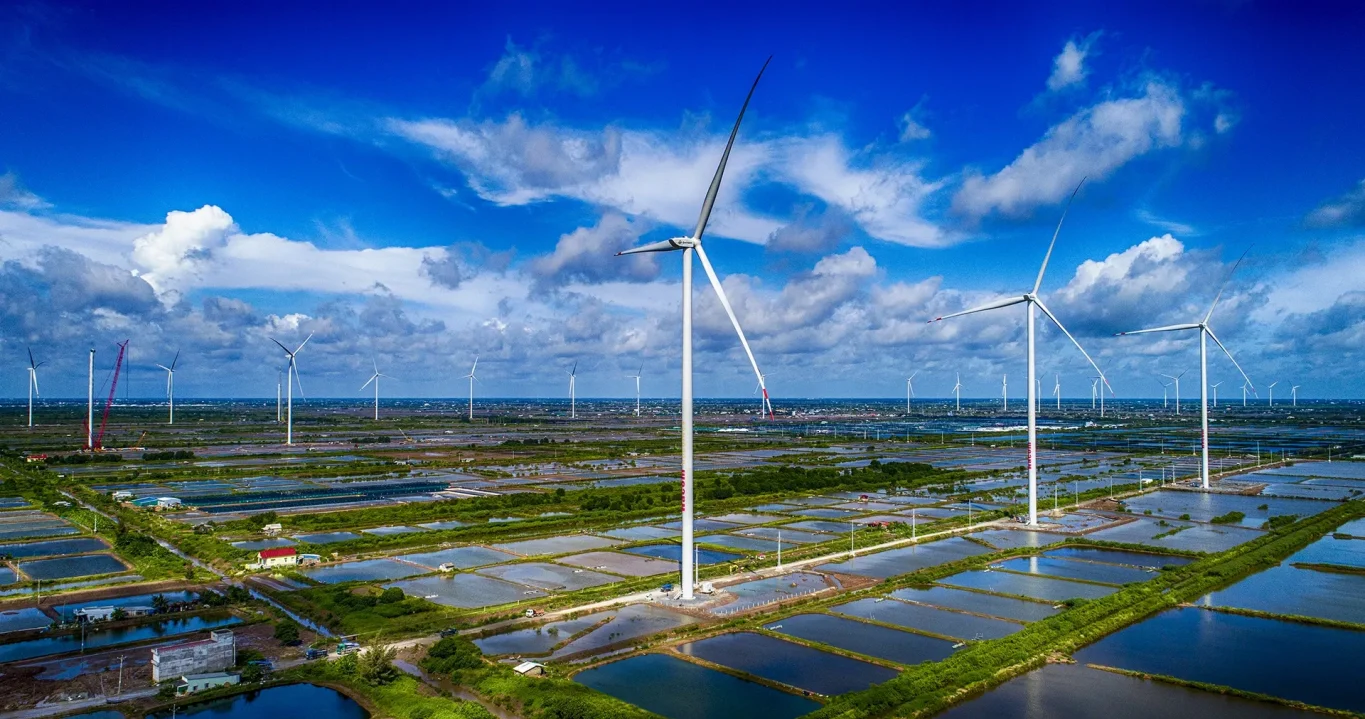
This method predominantly utilizes crawler cranes or heavy-duty all-terrain mobile cranes with lifting capacities ranging from 600 tons to 1,600 tons. Based on the rotor assembly methodology (Hub and blades), this approach is divided into two distinct technical variants with substantially different complexity levels:
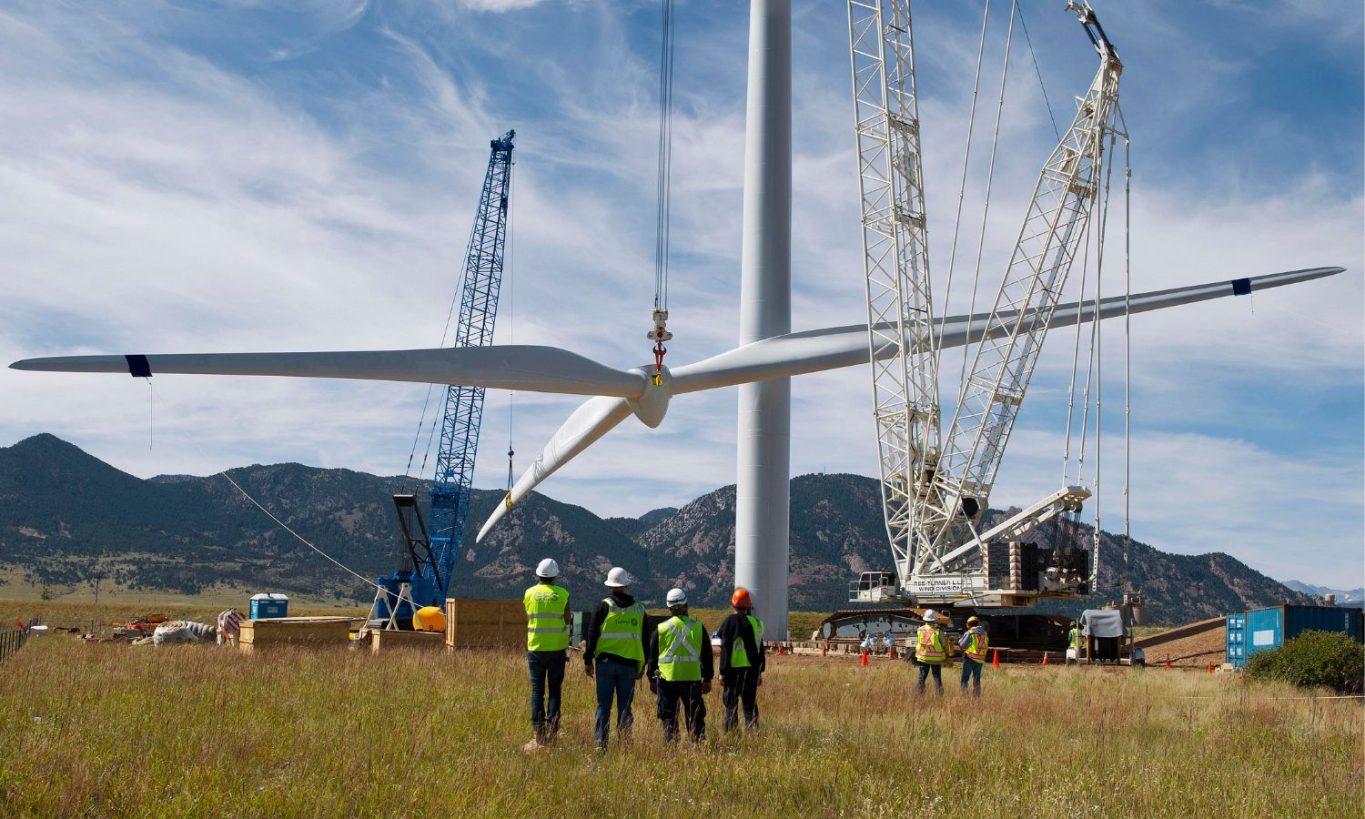
1a. Full Ground-Level Rotor Star Assembly and Tandem Hoisting (Rotor Star Lift)
-
Execution Method: The entire Hub and 3 blades are fully assembled on the ground into a star shape (rotor star); the turbine generator and nacelle are also fully assembled right on the crane hardstand. Subsequently, the main super-crane hoists the nacelle to install onto the tower top, followed by lifting the complete rotor star assembly to connect directly to the nacelle drive shaft.
-
Advantages: Technicians work entirely at ground level when torquing and tensioning blade bolts, ensuring maximum safety and precise torque control. Aerial crane hoisting duration is extremely rapid (requiring just a single main lift).
-
Disadvantages: Requires an exceptionally large hardstand area to lay out all 3 blades horizontally (with rotor diameters reaching over 150m). The lifted weight is extremely heavy and wind drag resistance is severe during hoisting, demanding robust ground bearing capacity and crane load chart margins.
-
Applicable Scenarios: Ideal for flat terrain and lowland wind power projects, such as the Southwestern Mekong Delta region (Bac Lieu, Soc Trang) where spacious hardstands are available, or for projects utilizing moderate blade dimensions.
-
Market Adoption: Highly prevalent during the early stages of Vietnam’s wind power industry when turbine ratings were relatively small (1.5 – 3 MW) and rotor diameters were within 100m – 120m, making full ground assembly technically and spatially viable.
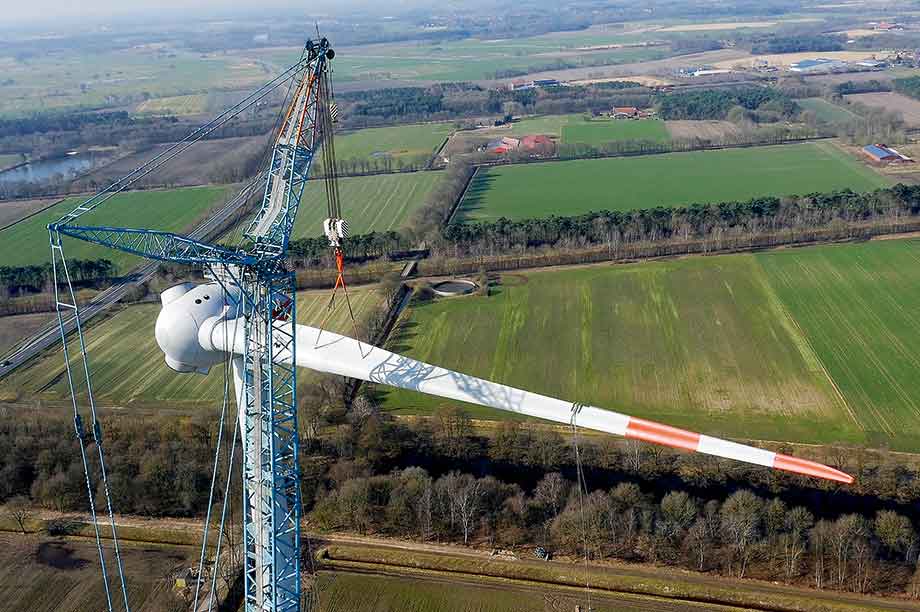
1b. In-Situ Aerial Assembly (Single Blade Installation)
-
Execution Method: The tower sections, lower nacelle, turbine generator, and upper nacelle housing are erected first. Next, the crane lifts the Hub assembly to mount onto the Nacelle. Finally, each individual blade is hoisted, aligned, and bolted sequentially into the Hub. Alternatively, a “Bunny Ears” variation is sometimes utilized—assembling the Hub and 2 blades on the ground, lifting them together, and installing the 3rd blade aloft.
-
Advantages: Maximizes footprint savings by eliminating the need for a wide sweep area for 3 pre-assembled blades. Wind drag area when hoisting individual blades is significantly lower than a full rotor star assembly, ensuring maximum safety in high-wind zones with substantial wind energy potential.
-
Disadvantages: Extended aerial working hours because 3 to 4 separate lifts are required. Riggers and mechanical technicians must perform precision bolting operations at heights exceeding 100 meters under turbulent wind conditions—posing high occupational risks without stringent HSE protocols.
-
Applicable Scenarios: The only viable solution for complex mountainous wind power construction in the Central Highlands (Gia Lai, Dak Lak, Quang Tri)—where hilltop grading area is severely restricted and narrow hardstands cannot accommodate full rotor layout.
-
Market Adoption: Currently the most prevalent method globally, accounting for over 70% of onshore projects in Vietnam due to the trend toward larger multi-megawatt turbines where providing expansive hardstands is impractical, except for certain nearshore projects.
METHOD 2: CRANELESS / SELF-ERECTING METHOD
Technological advancements from international manufacturers (such as the KoalaLifter or Nabrawind systems) have pioneered erection methods that operate without heavy 1,000-ton super-cranes.
-
Execution Method: A small auxiliary mobile crane (standard utility crane used for truck unloading) is deployed to erect the base tower section and install a self-climbing hydraulic jacking system hugging the tower shell. This system uses ultra-high-strength hydraulic clamping collars to grip the steel tower shell, climbing incrementally towards the top while hoisting subsequent tower sections, the nacelle, or blades up for installation.
-
Advantages: Completely eliminates the immense costs of mobilizing and transporting wind turbine equipment alongside heavy super-cranes (which typically require 30–40 truckloads of oversized/overweight cargo just for counterweights and boom sections). Capable of operating in wind gusts up to 15–20 m/s (whereas conventional cranes are restricted from hoisting when wind speeds exceed 8–10 m/s).
-
Disadvantages: Overall erection cycle time per tower is longer due to multiple hydraulic jacking cycles. High capital expenditure or rental costs for proprietary self-climbing robotic systems from abroad, requiring sophisticated automated electro-hydraulic control.
-
Applicable Scenarios: Highly optimized for ultra-complex terrains and narrow ridgelines where heavy crane convoys cannot navigate, or for major O&M maintenance involving gearbox and main generator replacements in later operational phases.
-
Market Adoption: Still nascent in Vietnam and primarily in the research and feasibility study stage for domestic adoption due to technology cost barriers.
These are the primary wind turbine erection methodologies currently employed globally. Each method presents distinct advantages and trade-offs, requiring developers and contractors to evaluate site conditions rigorously to select the safest and most cost-effective engineering solution.