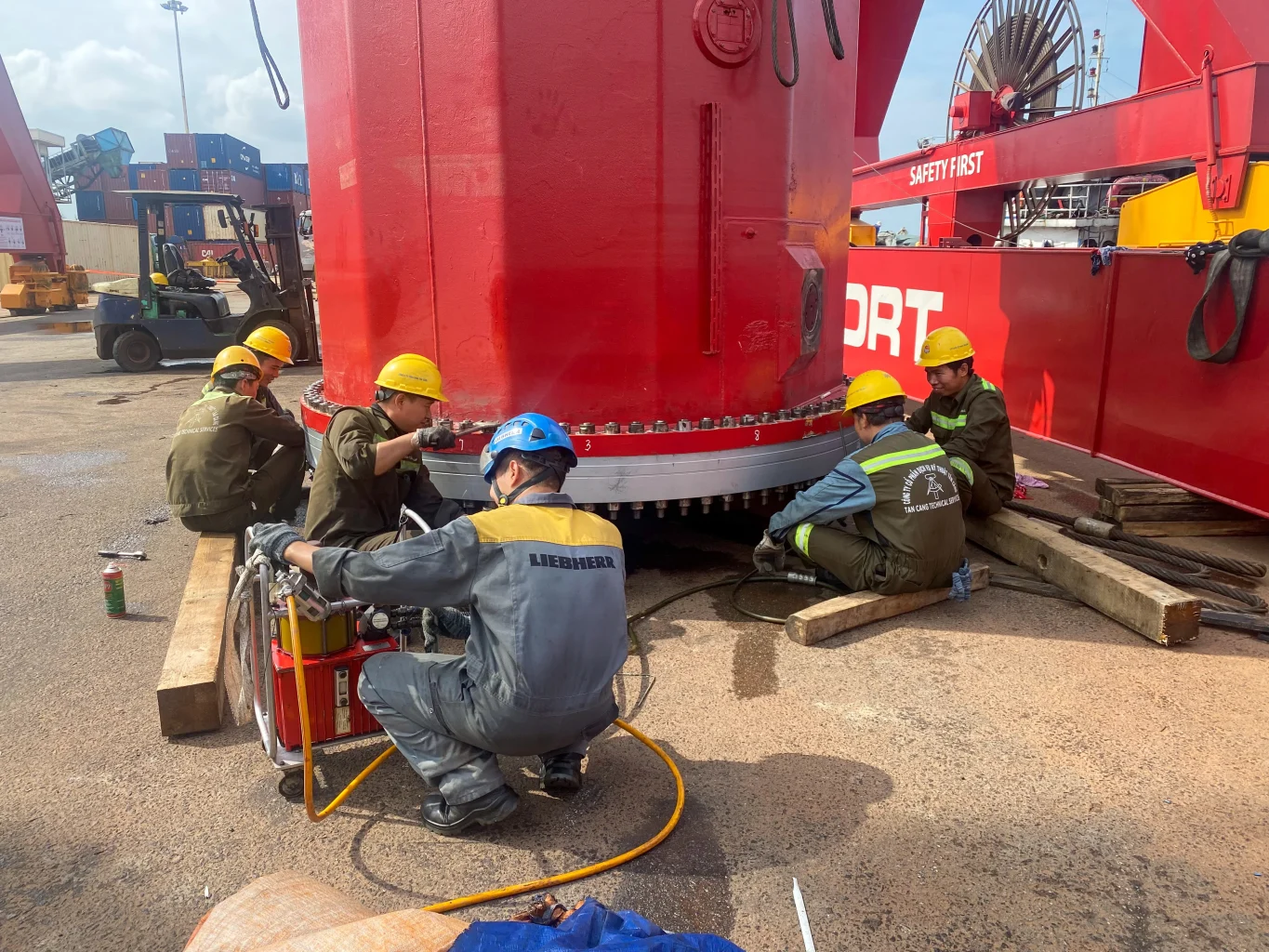
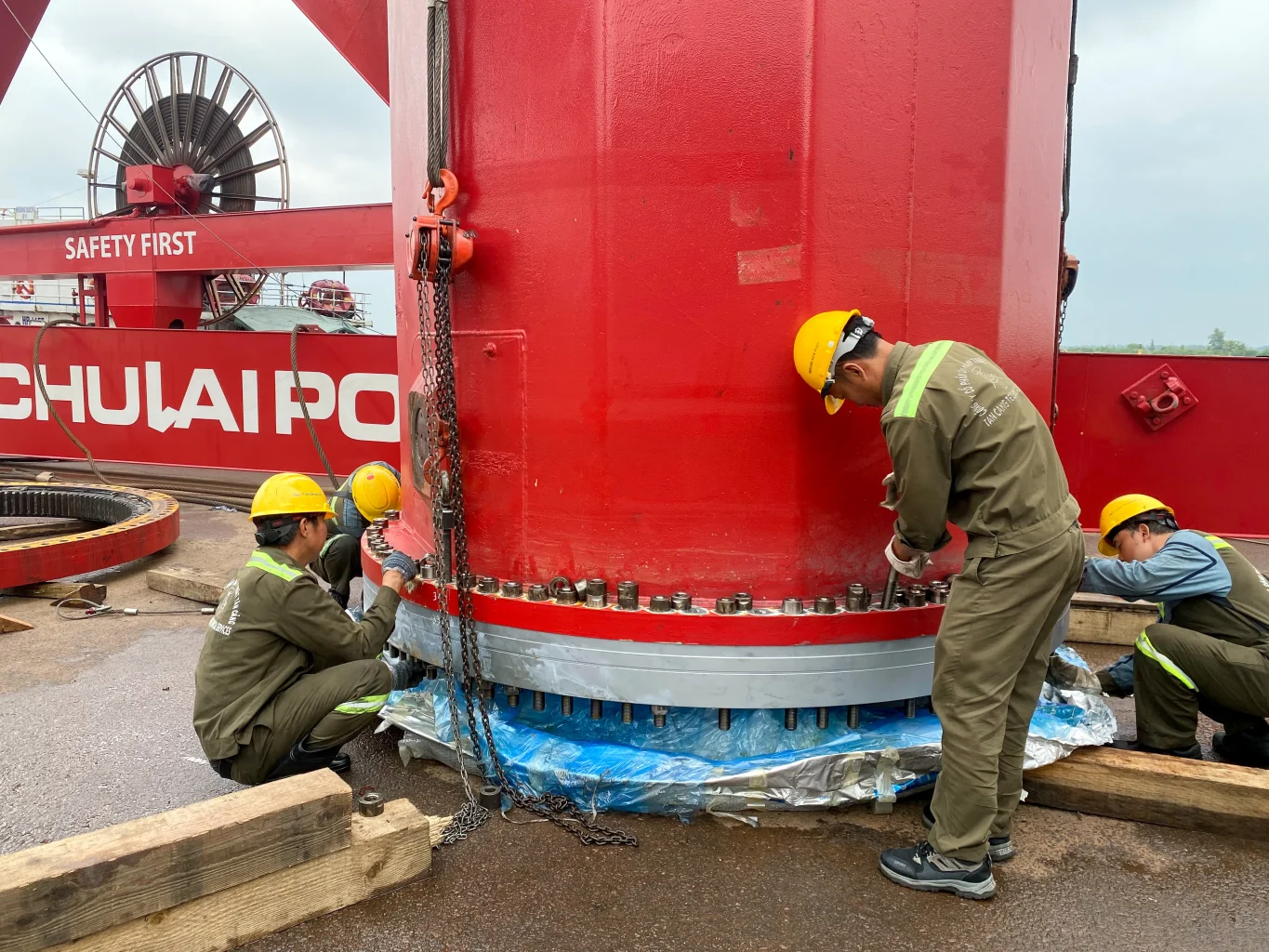
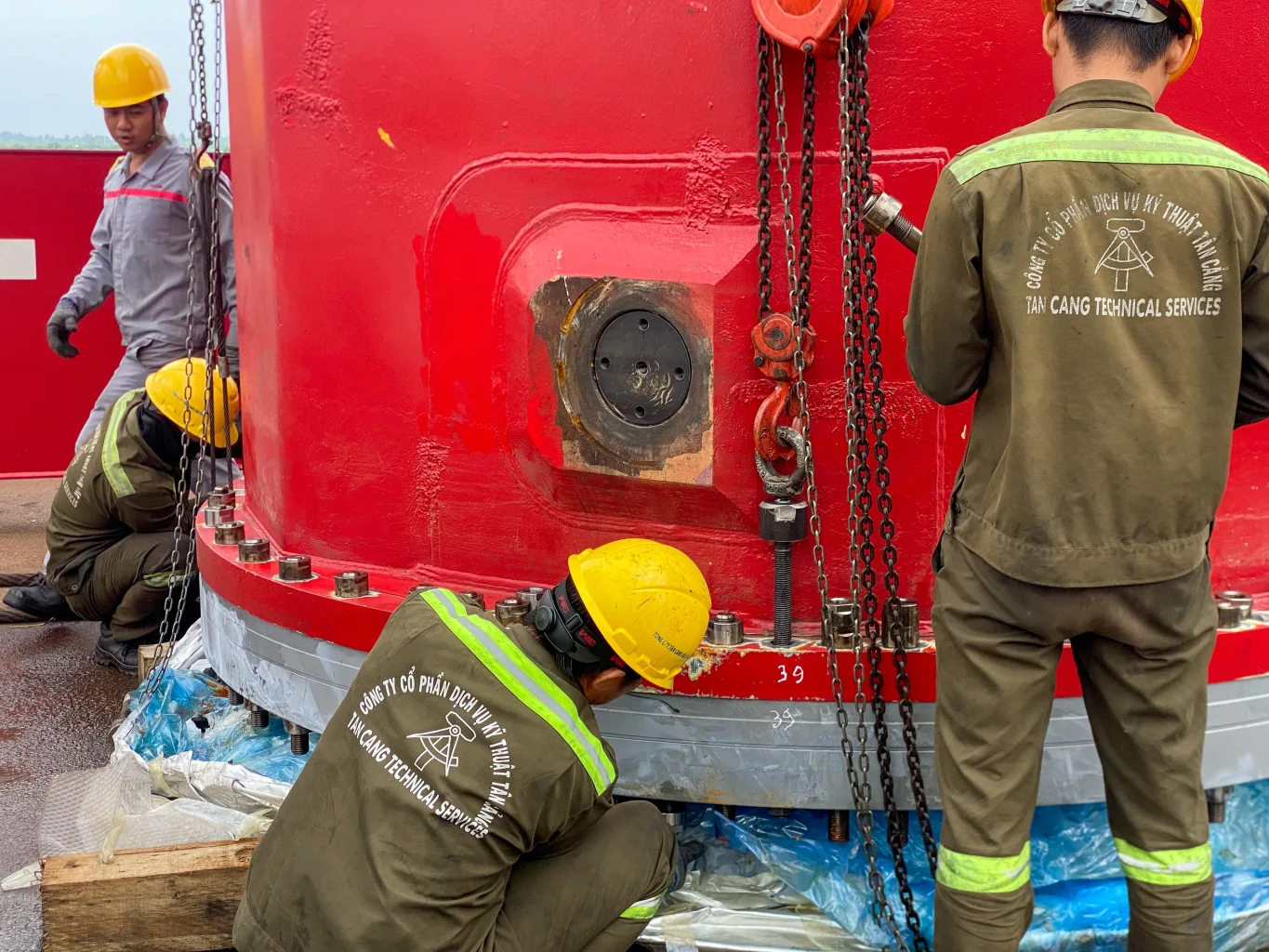
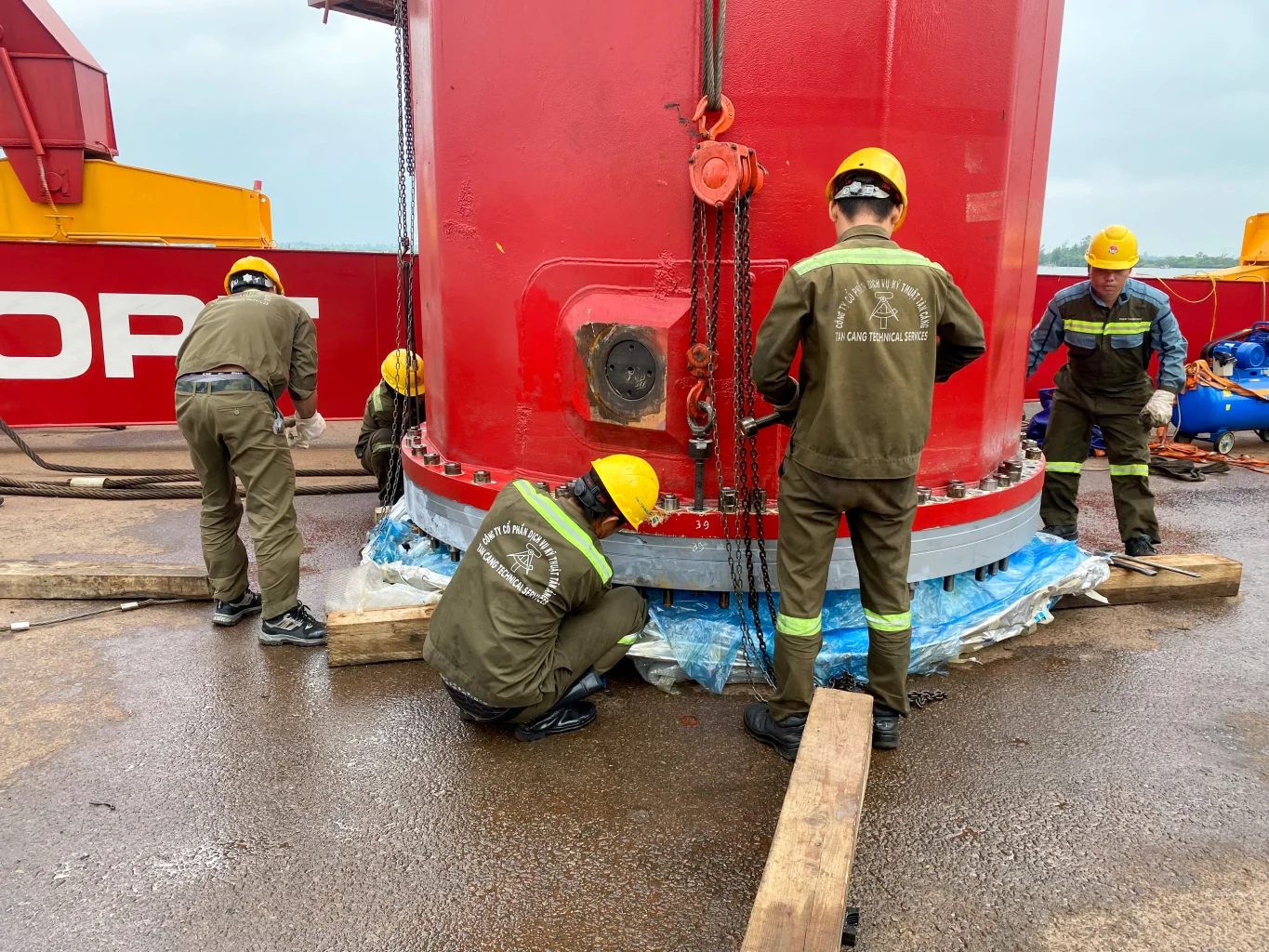
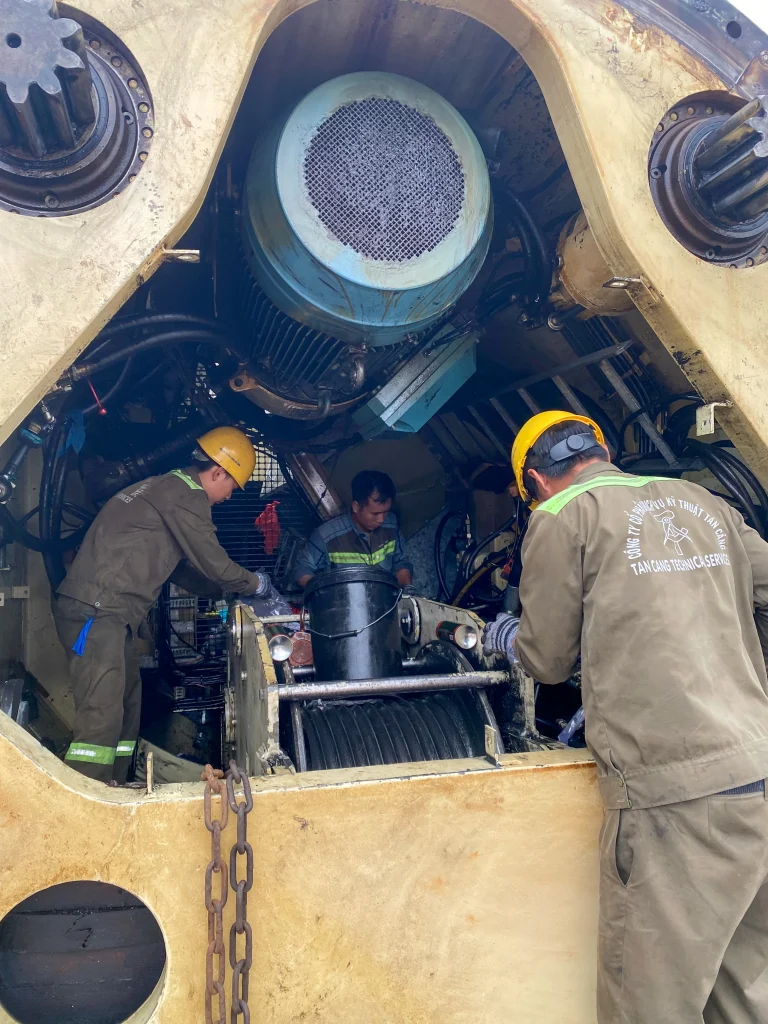
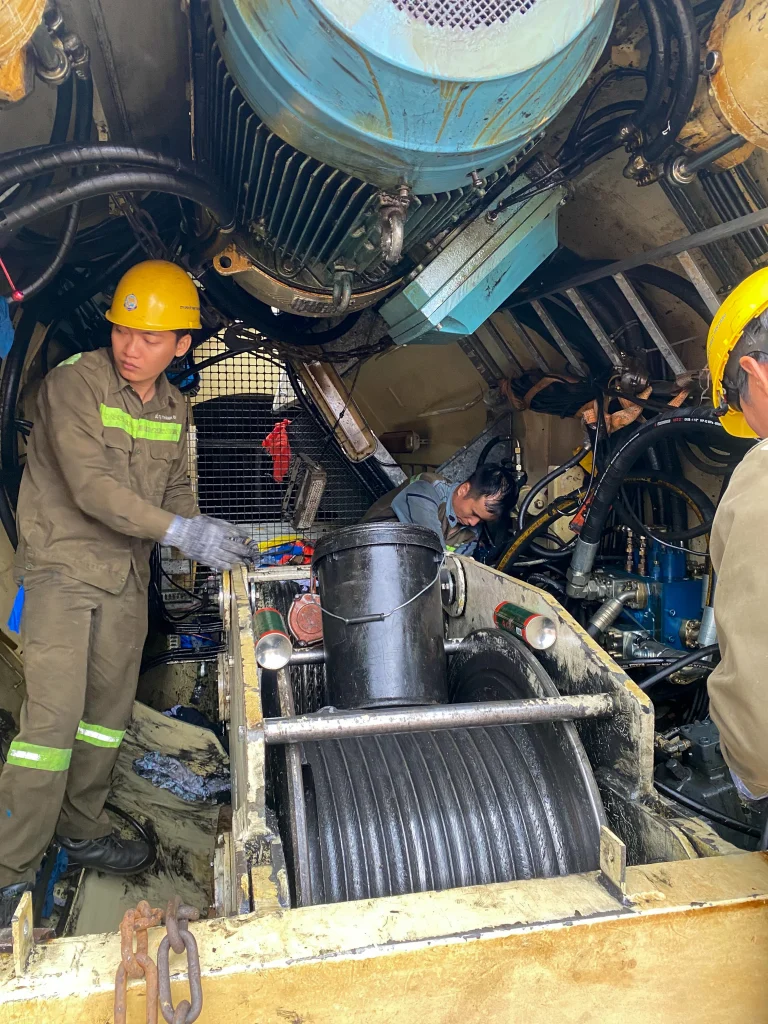
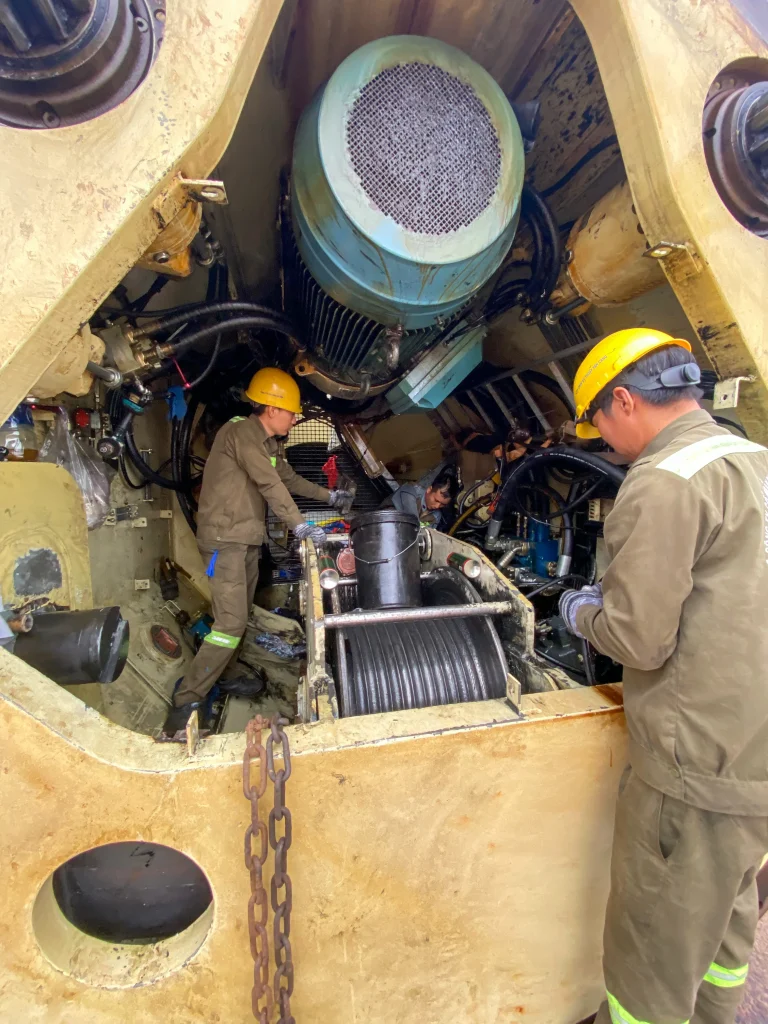
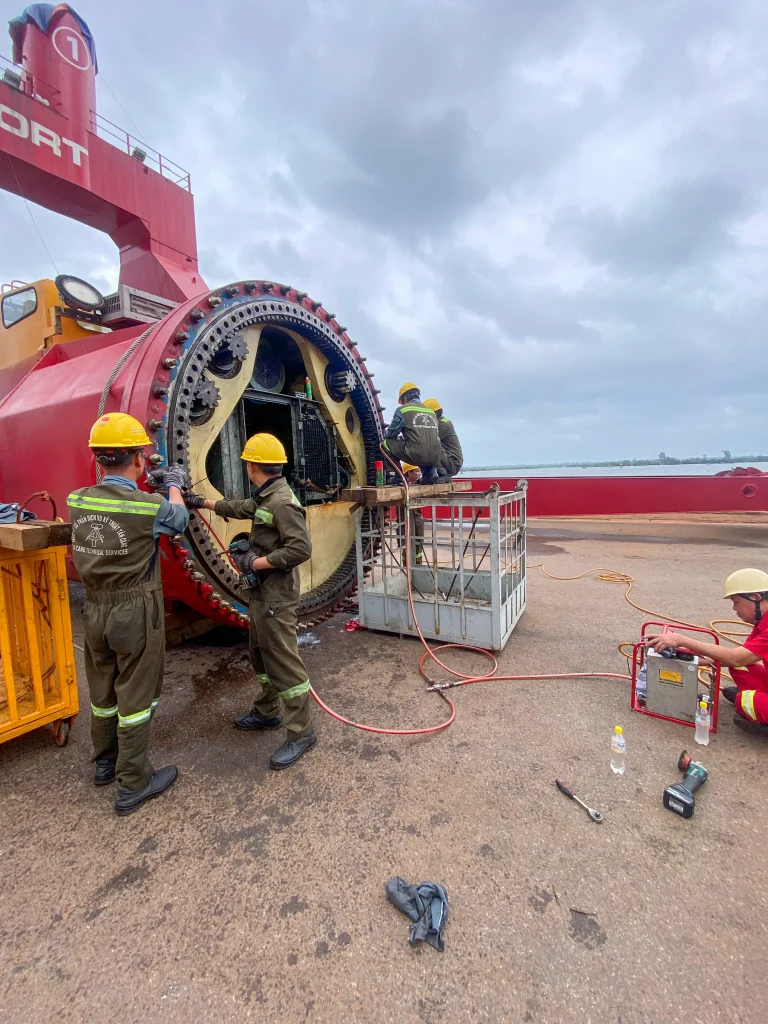
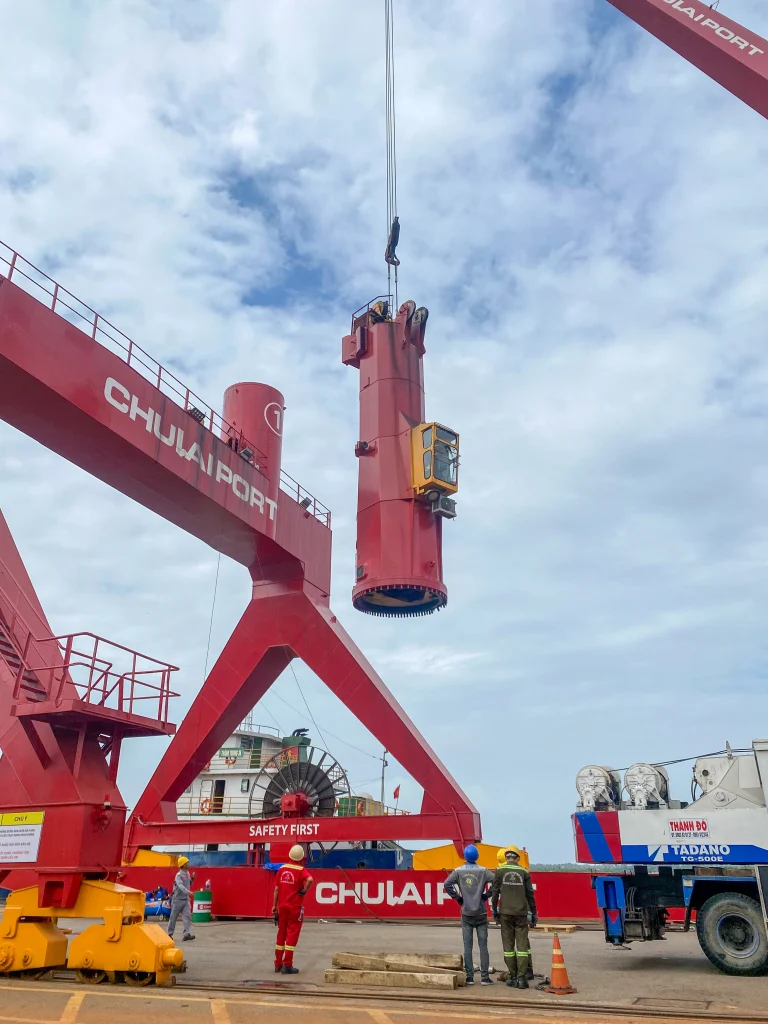
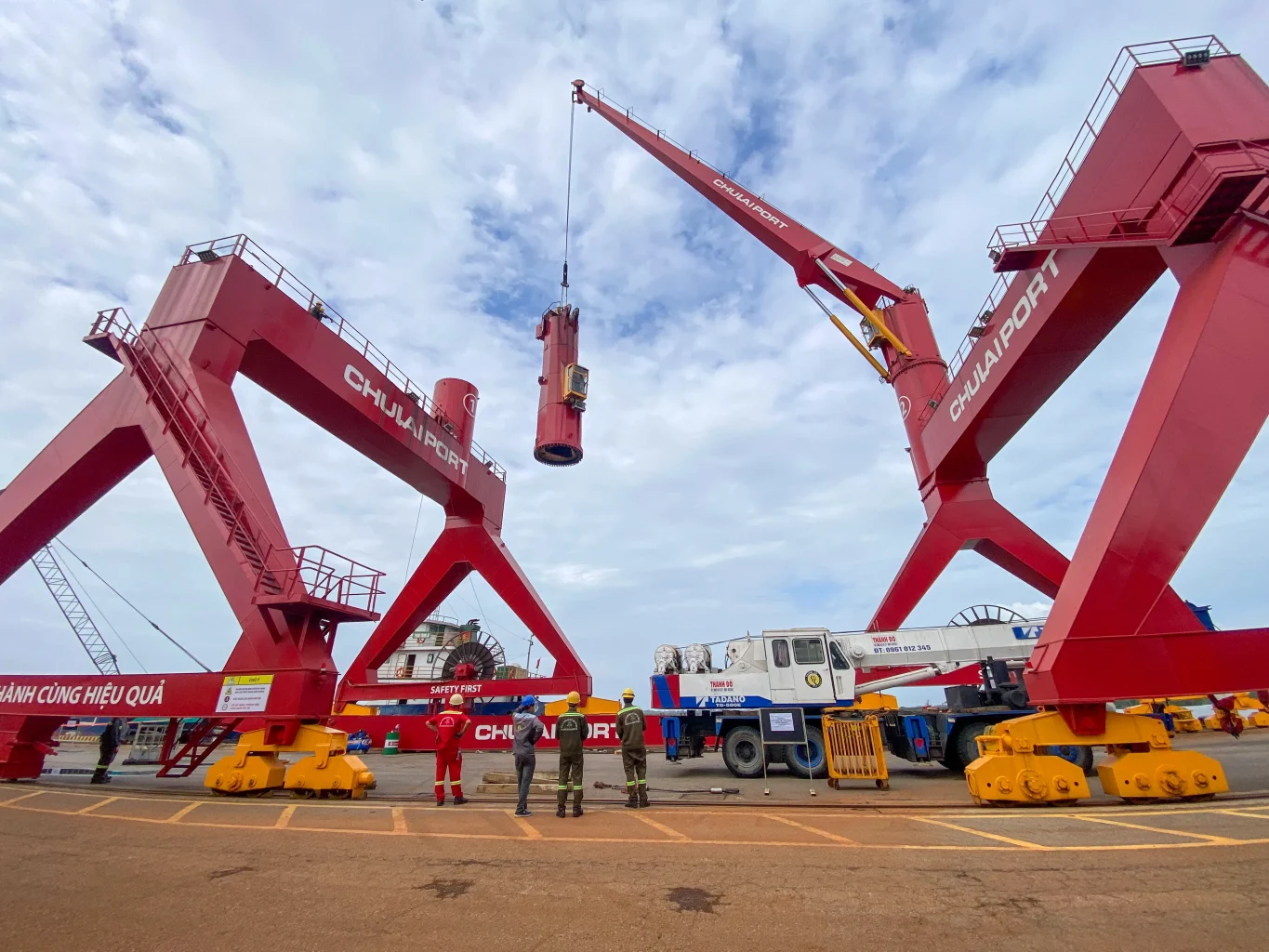
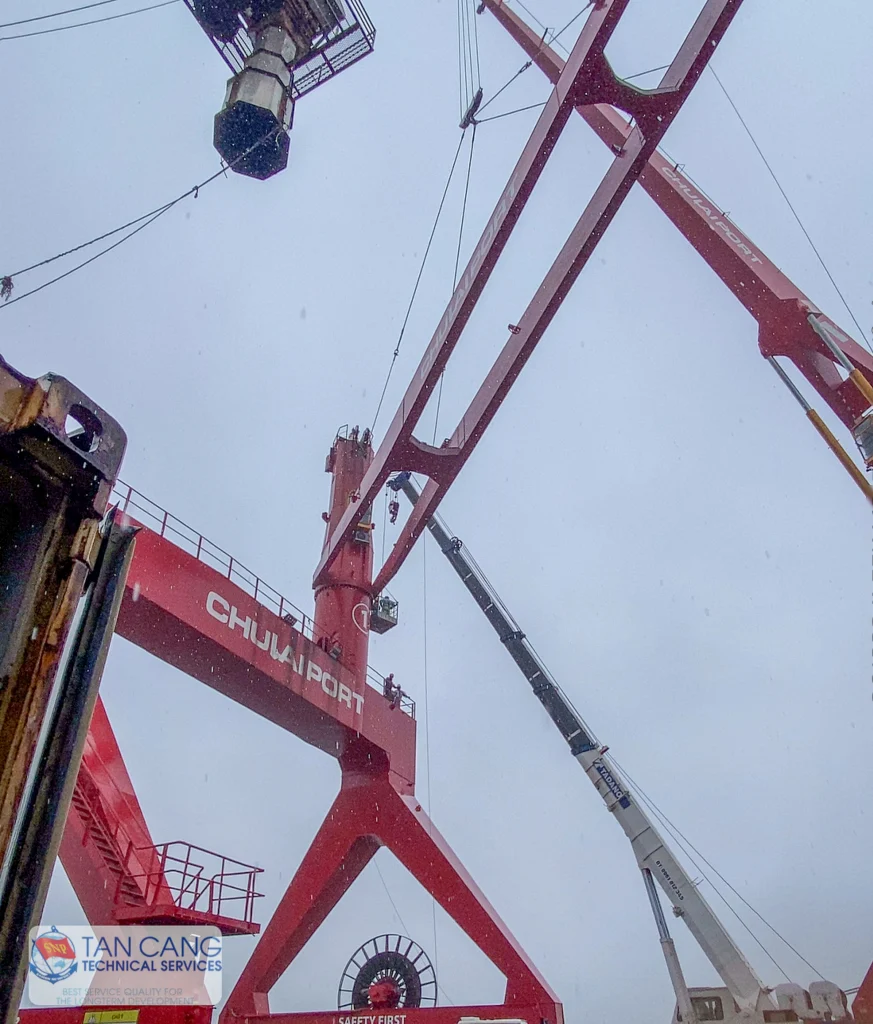
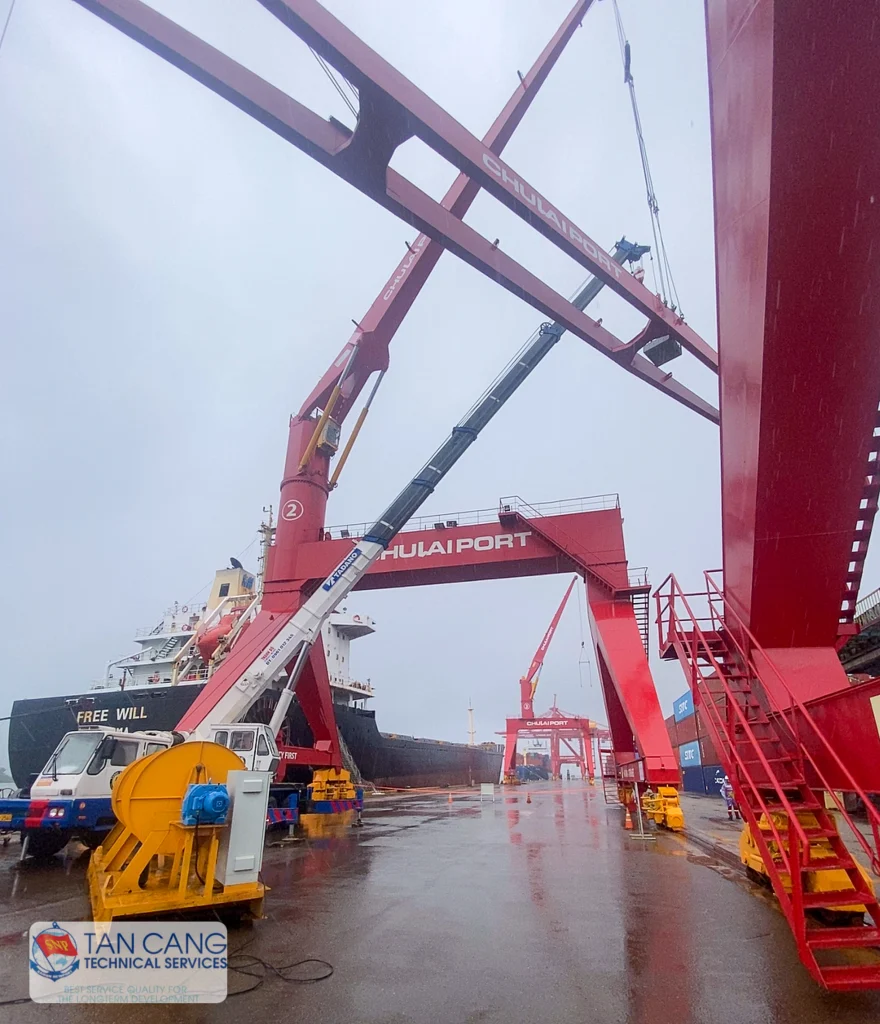
Project Overview: Slewing Ring Bearing Replacement for Liebherr Crane at Chu Lai Port
- Project: Slewing Ring Bearing Replacement for Liebherr Harbor Crane
- Client / Investor: CHU LAI PORT
- Location: Chu Lai Port Quayside, Quang Nam Province
- Execution Timeline: Q4/2025
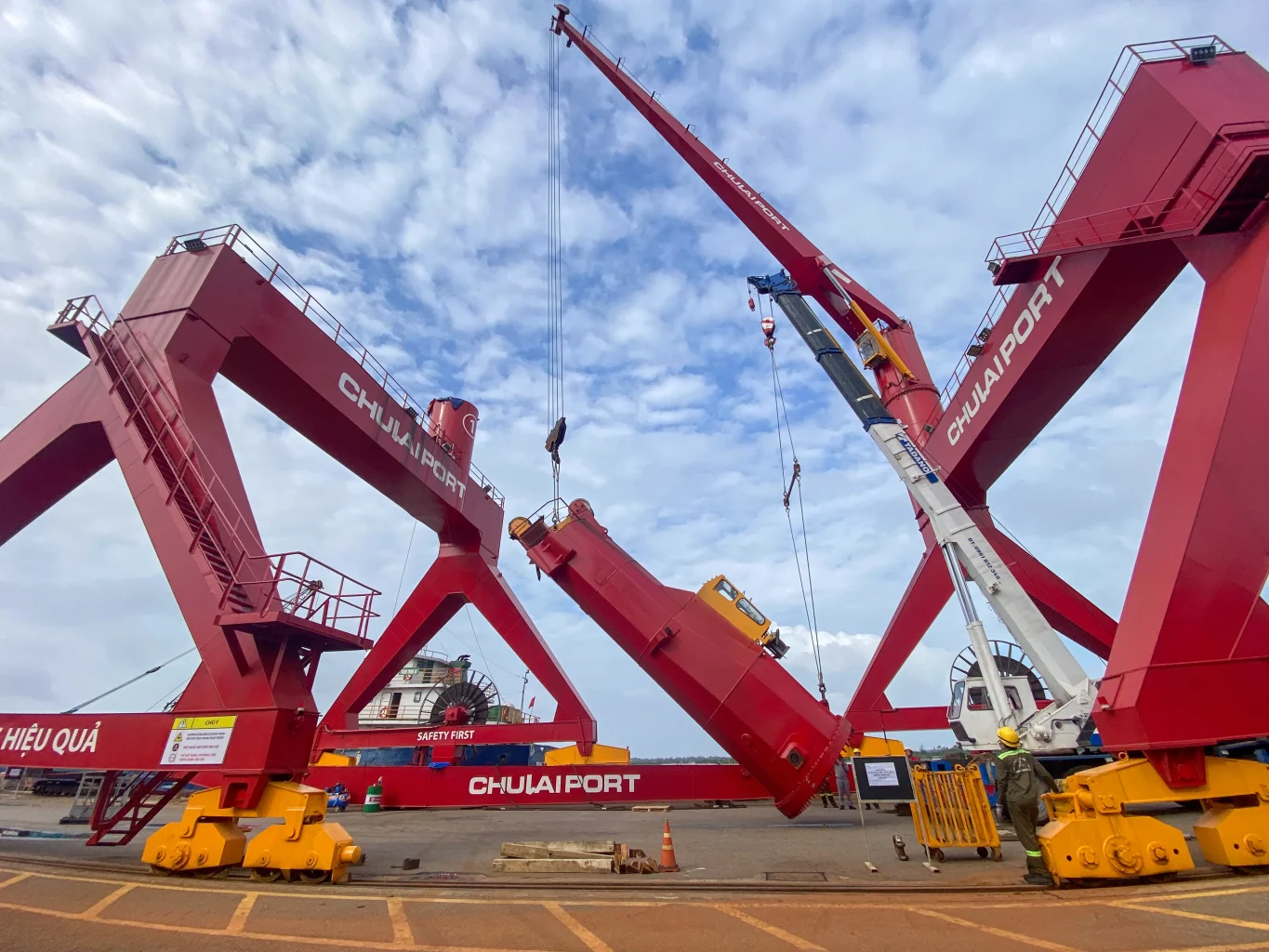
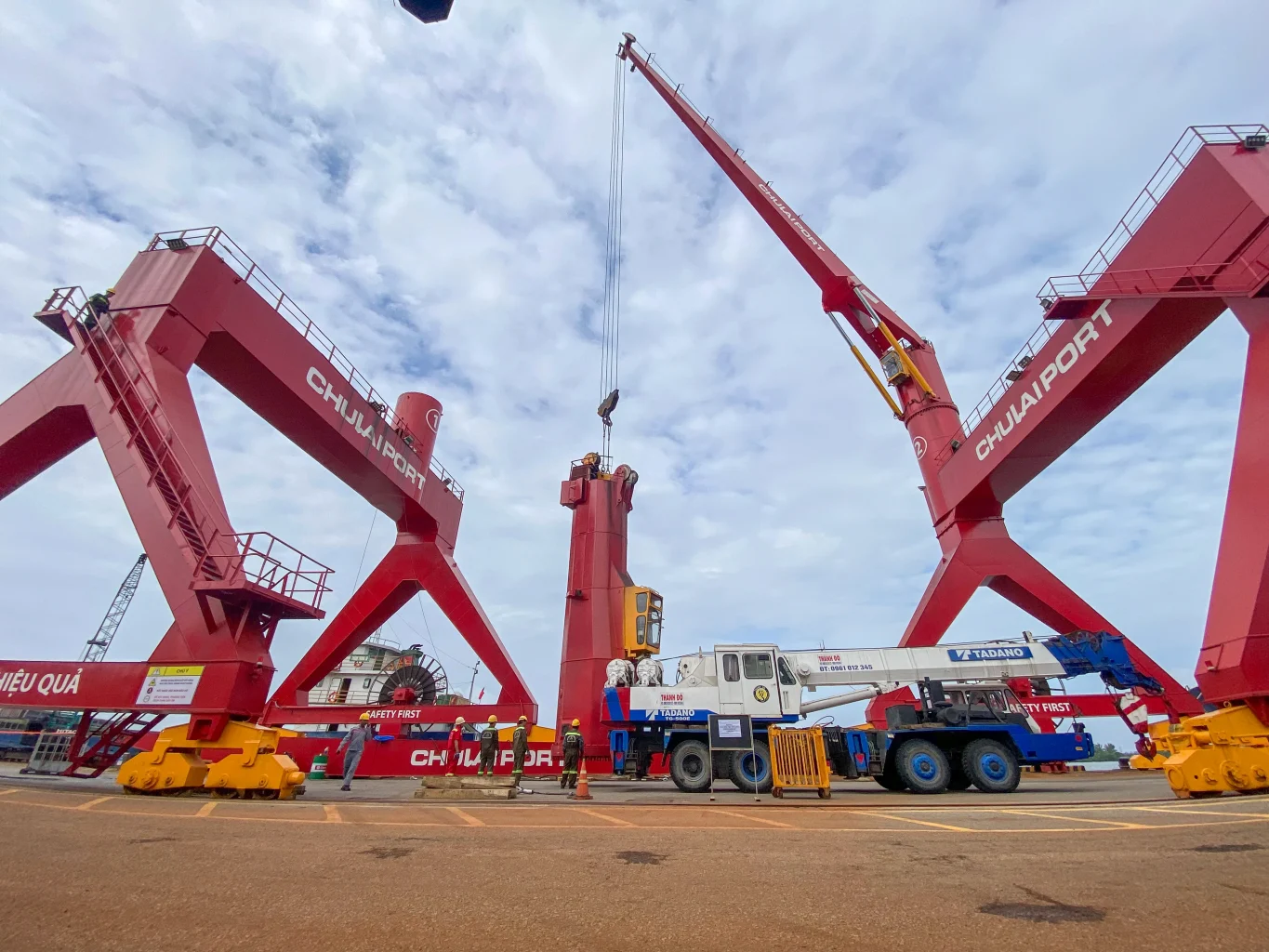
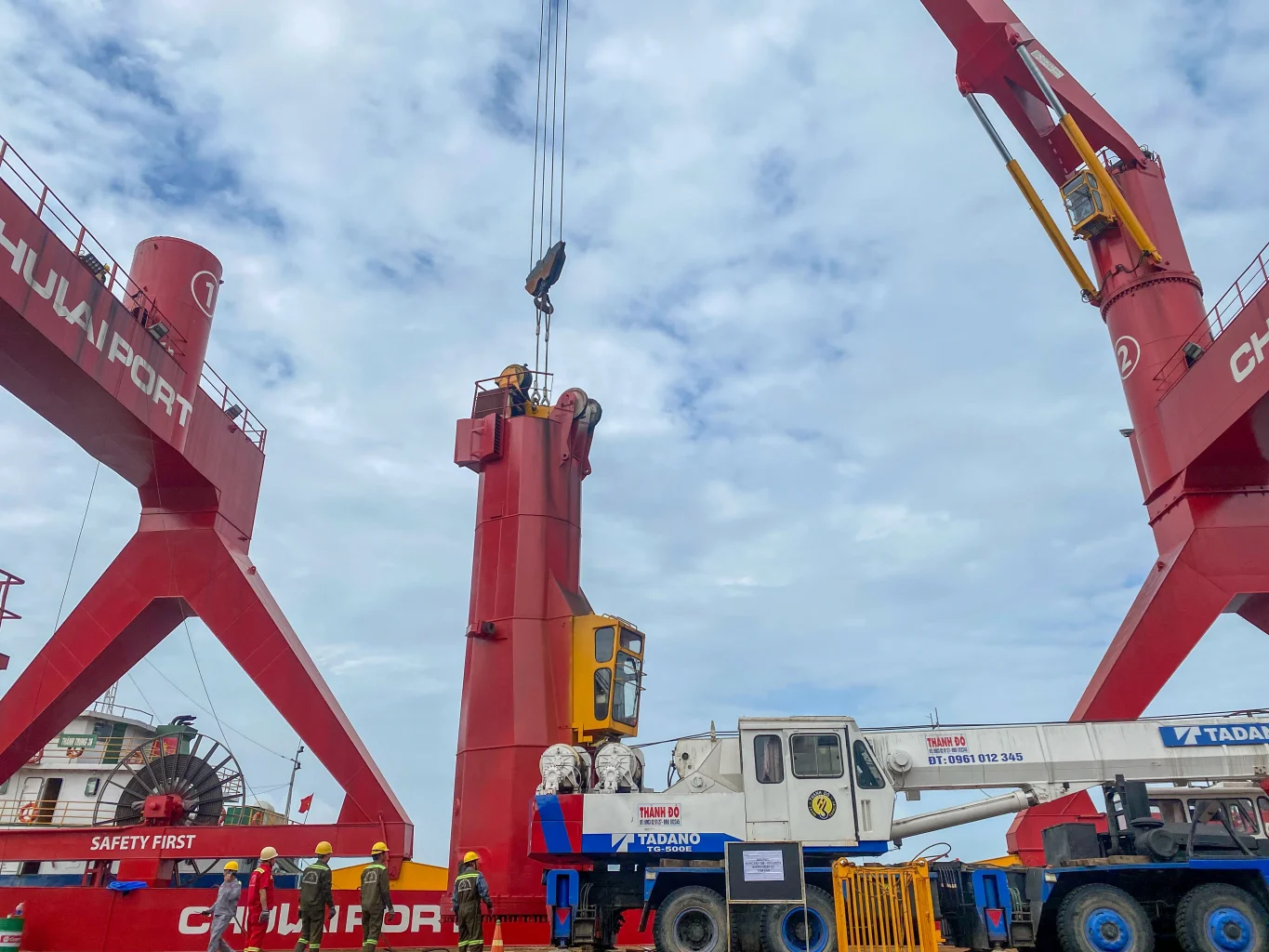
- Key Supporting Equipment: 5-ton forklift, 220-ton all-terrain mobile crane (for structural heavy lifting), active Liebherr harbor crane (target equipment for repair).
- Project Objective: Swiftly restore the harbor crane to its original operating capacity, ensuring continuous port operational readiness for the client.
SCOPE OF WORK: SLEWING RING BEARING REPLACEMENT FOR LIEBHERR CRANE AT CHU LAI PORT
PHASE 1: PLANNING AND ENGINEERING PREPARATION
- Initial Inspection and Condition Assessment of Liebherr Harbor Crane:
- Inspect the current structural and mechanical condition of the Liebherr crane, specifically the worn slewing ring bearing, raceways, and adjacent structures.
- Collect detailed crane data, serial numbers, and slewing bearing technical specifications based on Liebherr OEM documentation.
- Identify potential operational hazards and workplace safety risks.
- Development of Detailed Method Statement:
- Formulate step-by-step disassembly and reassembly procedures tailored specifically to the Liebherr crane on-site.
- Establish lifting sequences, positioning of the 220-ton auxiliary mobile crane, 5-ton forklift, and supporting lifting gear.
- Plan resource allocation, specialized tooling, materials, and workforce.
- Formulate comprehensive HSE, fire prevention, and environmental protection plans throughout execution.
3. Mobilization of Materials and Equipment:
- Inspect and verify that the replacement slewing ring bearing is supplied in full compliance with OEM specifications and quality standards (with authentic CO/CQ certificates).
- Prepare all OEM-specified consumables (high-tensile bolts, nuts, washers, specialized lubricants, degreasing chemicals) per Liebherr standards.
- Mobilize the 220-ton mobile crane, 5-ton forklift, certified modular scaffolding, and specialized tooling (hydraulic torque wrenches, bolt tensioners, laser alignment instruments, flatness gauges).
- Provide complete PPE gear for all engineering personnel.
4. Site Preparation and Safety Zoning:
- Barricade and establish a dedicated safety perimeter around the work zone.
- Clear obstacles to provide ample working radius for auxiliary crane operations and component staging.
- Verify jetty/pavement load-bearing capacity at outrigger positions and component staging areas.
PHASE 2: DISASSEMBLY OF WORN SLEWING RING BEARING
- De-energization and Mechanical Securing of Crane
- Disassembly of Auxiliary Components & Interfacing Systems
- Separation of Superstructure and Undercarriage:
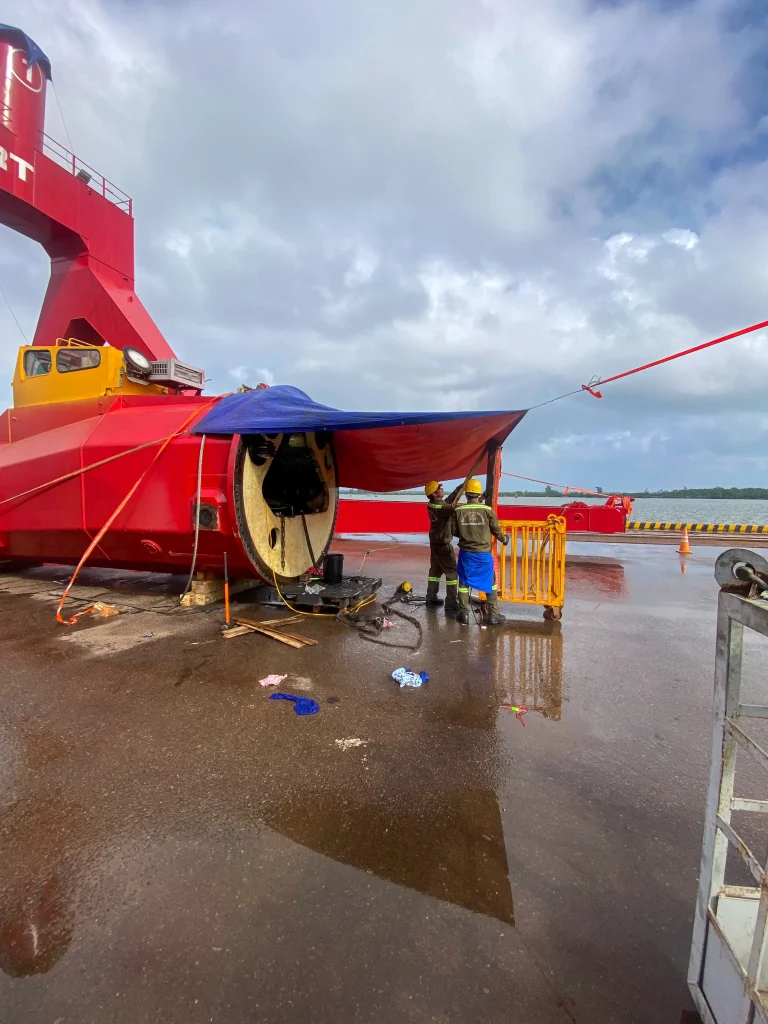
- Rig and hoist the crane superstructure (including engine housing, winches, gearboxes, machinery house) clear of the undercarriage/pedestal.
- Lower and secure the superstructure safely onto designated heavy-duty temporary support stands.
- Removal of Worn Slewing Bearing:
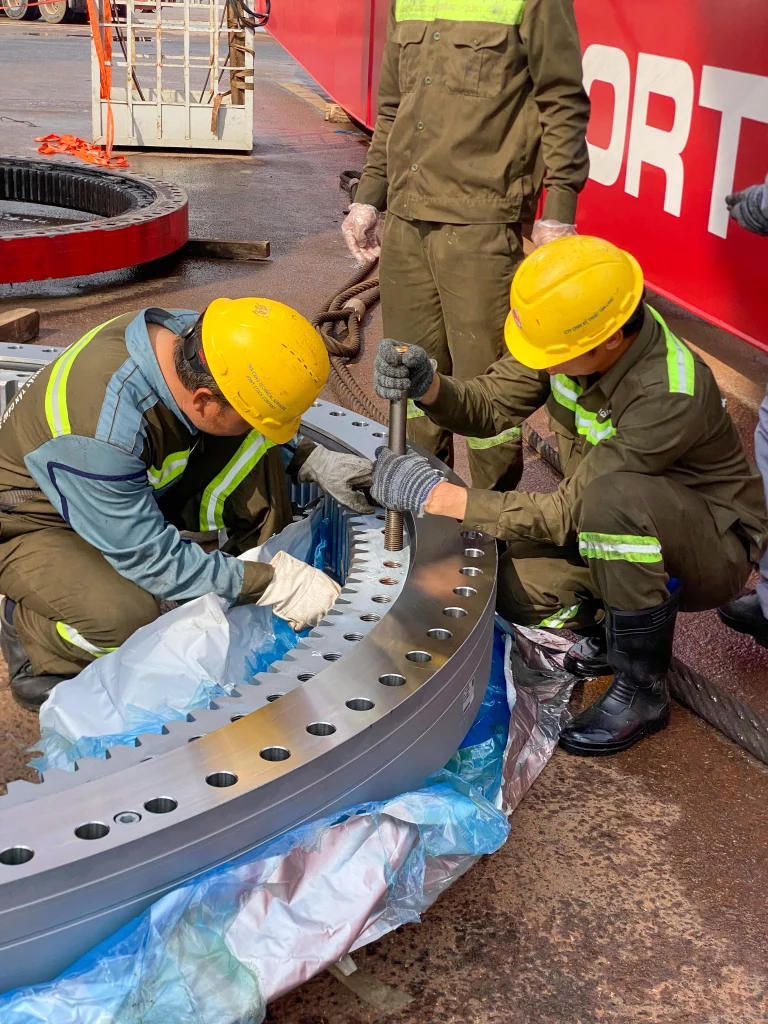
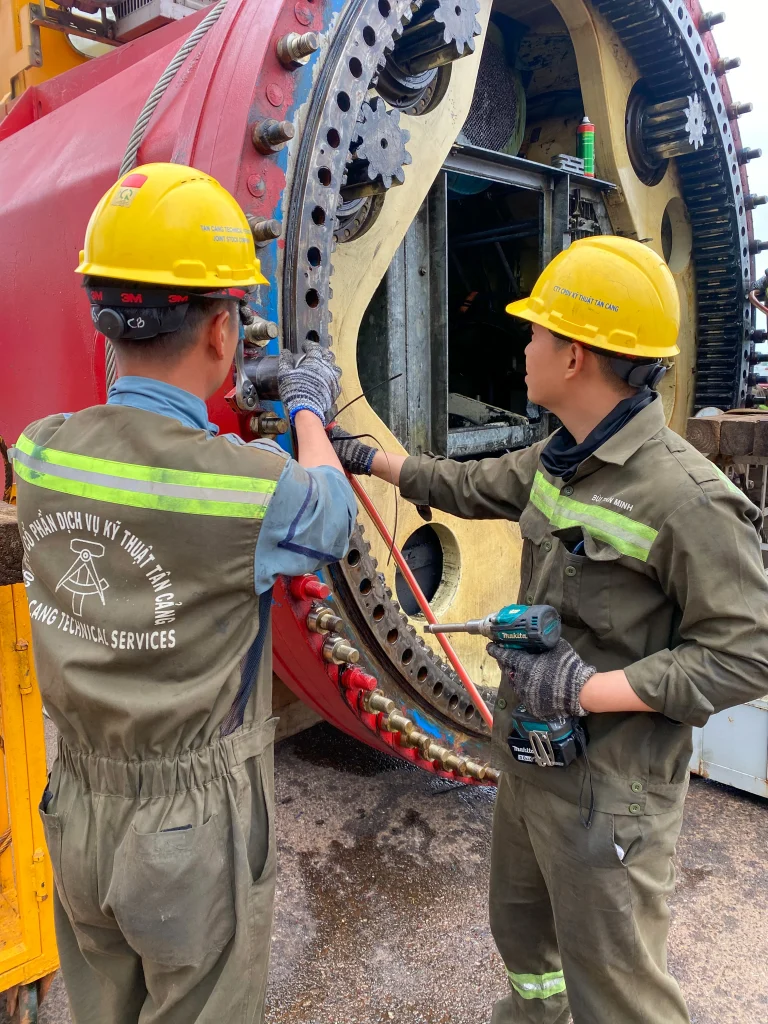
- De-torque and remove all high-tensile bolts securing the slewing bearing to the superstructure and undercarriage flange. Mark and record positions for precise reassembly.
- Inspect bolt condition and segregate items requiring replacement.
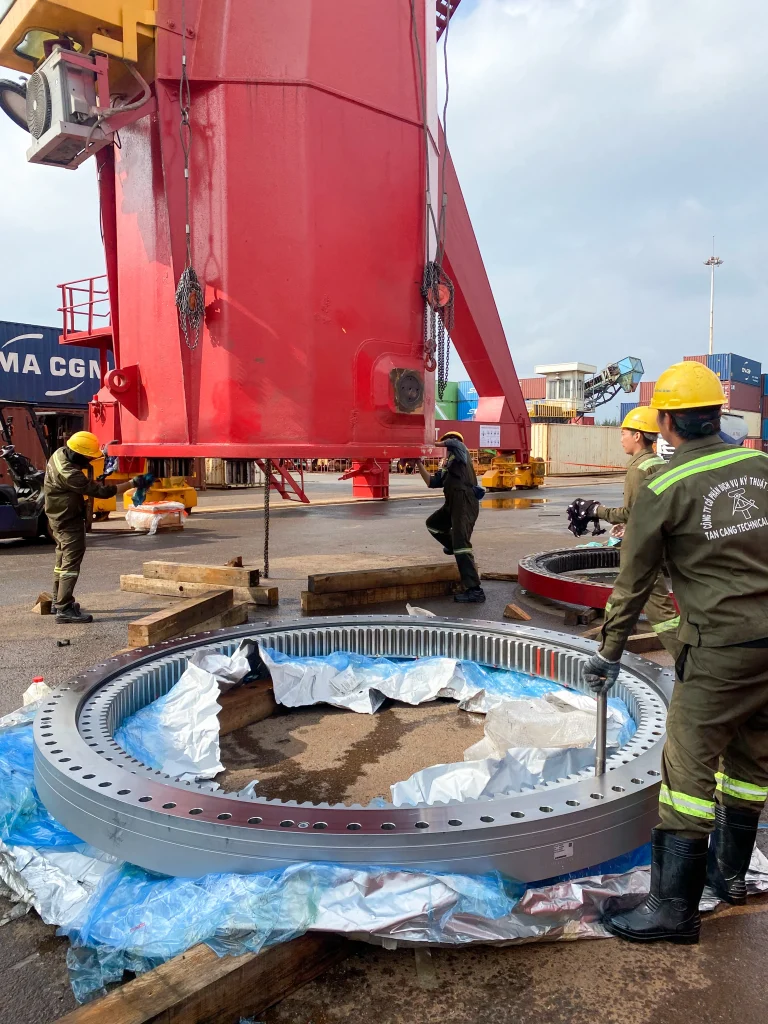
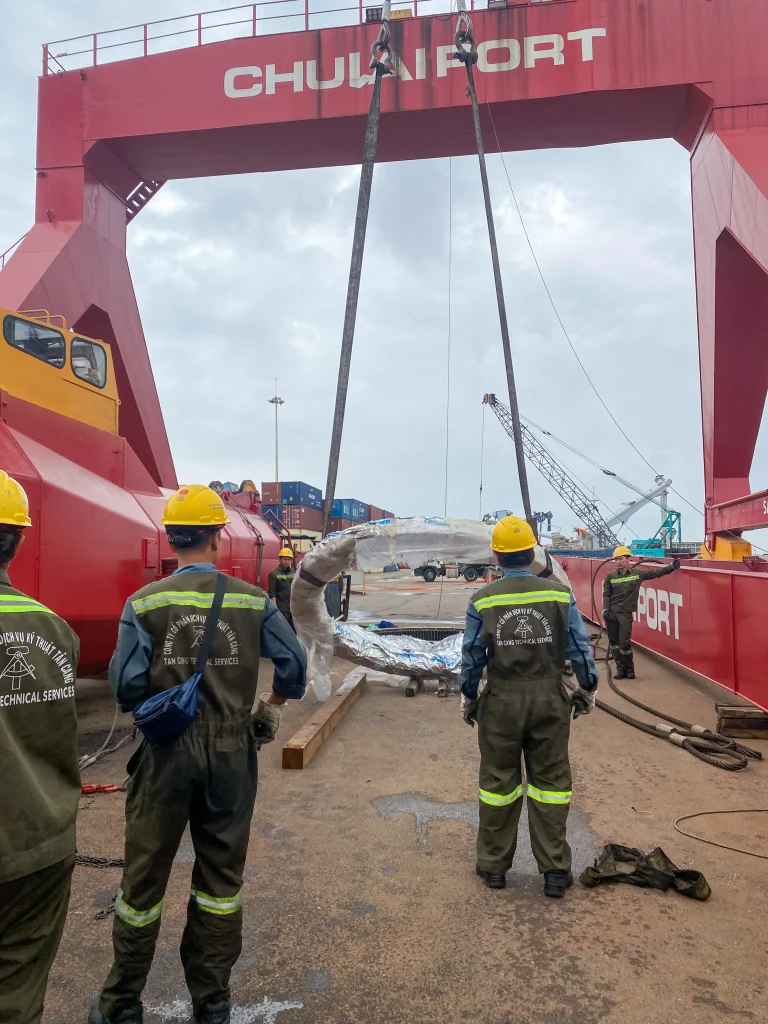
- Rig and hoist the old slewing bearing using certified lifting accessories and transfer to the staging area.
PHASE 3: CLEANING, INSPECTION, AND INSTALLATION OF NEW SLEWING BEARING
- Surface Cleaning and Flange Preparation:
- Thoroughly clean mounting mating surfaces on both the superstructure and undercarriage flanges. Remove rust, grease, debris, and old coatings.
- Verify flange flatness, parallelism, and surface integrity using precision instruments (straight edges, dial gauges, flatness feelers). Ensure zero warping or surface defects.
- Perform flange surface repairs/lapping if necessary in accordance with OEM tolerances.
- Inspection of New Slewing Bearing:
- Perform visual inspection of the new slewing ring bearing for transit damage.
- Verify all technical dimensions, gear teeth profiles, and mounting hole alignments against OEM drawings.
- Installation of New Slewing Bearing:
- Rig and lower the new slewing bearing into position, aligning accurately per Liebherr technical guidelines.
- Install high-tensile mounting bolts following the specified cross-pattern sequence, torque limits, and multi-stage tensioning procedures stipulated in Liebherr engineering manuals.
- Use calibrated hydraulic torque wrenches to guarantee exact torque values.
PHASE 4: REASSEMBLY AND POST-CONSTRUCTION INSPECTION OF LIEBHERR CRANE
- Reassembly of Crane Structures:
- Hoist the crane superstructure and mate it back onto the undercarriage flange with millimeter precision.
- Fasten superstructure-to-bearing bolts following calibrated torque specifications and tightening sequences. Reinstall the main boom, operator cabin, and disconnected piping, cabling, and instrumentation.
- System Reconnection and Lubrication:
- Reconnect all hydraulic lines, electrical power wiring, and control bus cabling.
- Inspect and charge specialized grease/lubricants into the new slewing bearing raceways and gear teeth per Liebherr lubrication charts.
- Initial Functional Testing:
- Re-energize electrical and hydraulic systems.
- Test electrical, hydraulic, and safety interlocks post-connection.
- Perform low-speed no-load slewing trials, verifying smooth rotation, zero abnormal noise, no binding, and minimal vibration.
- Inspect hydraulic connections for fluid leaks.
PHASE 5: COMMISSIONING, LOAD TESTING, AND FINAL ADJUSTMENT
- Load Testing:
- Conduct static and dynamic load testing at rated capacity.
- Monitor slewing bearing behavior under load (deflection, raceway noise, operating temperature).
- Verify all crane safety devices and load moment limiters during testing.
2. Fine-Tuning and Re-Torquing:
- Re-check and confirm torque values on all slewing ring bolts after initial operating cycles.
- Fine-tune operational parameters to ensure peak lifting performance and safety.
PHASE 6: HANDOVER AND POST-PROJECT SUPPORT
- Technical Handover:
- Hand over the fully repaired and load-certified harbor crane to Chu Lai Port authorities.
- Provide complete as-built documentation, material test certificates (CO/CQ), load test reports, and operating/maintenance manuals for the new slewing ring bearing,
- Advise on periodic preventive maintenance and greasing schedules to ensure long-term equipment reliability.
- Site Demobilization and Housekeeping:
- Clean up work areas and restore quayside conditions.
- Collect and dispose of waste materials in strict compliance with environmental regulations.
- Demobilize all auxiliary cranes, specialized tools, and engineering personnel from the site.